Cricket Pitch Variants and Their Influence on T20 Series Outcomes Across Asian Leagues
Alex Simon · Aug 26, 2026
Cricket Pitch Variants and Their Influence on T20 Series Outcomes Across Asian Leagues
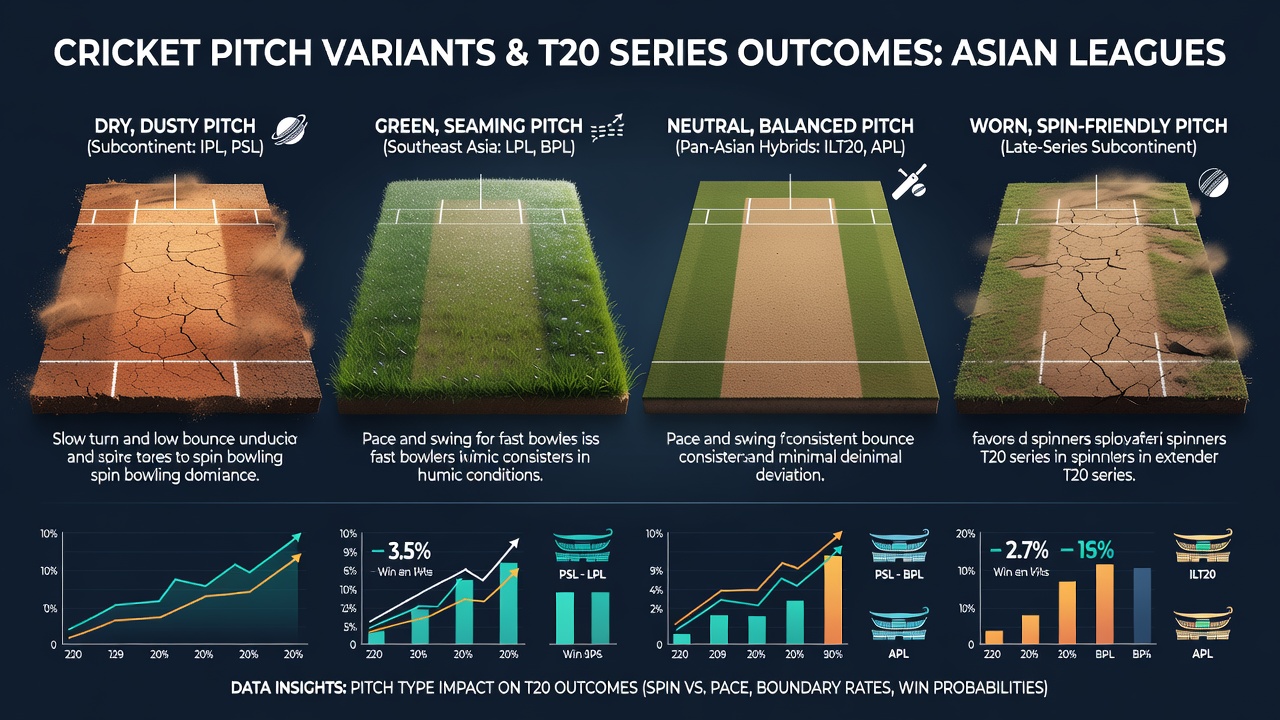
Asian T20 leagues feature distinct pitch conditions that shape match strategies and series results in measurable ways. Data collected from the Indian Premier League, Pakistan Super League, and Bangladesh Premier League reveal consistent patterns where surface characteristics influence batting averages, bowling strike rates, and chase success percentages. Observers note that these variations arise from soil composition, climate, and venue-specific maintenance practices, all of which league organizers document through annual pitch reports.Pitch Categories Common in Regional T20 Competitions
Three primary pitch types appear across these leagues. Dry, crumbling surfaces favor spin bowling as the match progresses, while grassy tracks offer early seam movement before flattening. Balanced, low-grass pitches provide consistent bounce and pace throughout the innings. According to pitch rating systems maintained by national boards, each category correlates with different scoring rates and win probabilities for teams batting first or second.
Patterns Observed in the Indian Premier League
Venues such as Chennai and Ahmedabad produce drier surfaces by the later stages of matches, leading to increased spin wicket tallies. Statistics compiled over multiple seasons show that teams relying on wrist spinners secure higher win percentages on these surfaces compared with pace-heavy attacks. In contrast, Mumbai and Bengaluru pitches retain more moisture early on, resulting in elevated powerplay scores when seamers extract swing. Series outcomes shift when teams adjust their playing elevens to match these documented conditions ahead of key playoff fixtures.
Conditions in the Pakistan Super League
Multan and Karachi grounds typically present flatter tracks that support higher totals and successful chases. Records indicate that teams winning the toss often elect to bowl first on these surfaces, capitalizing on dew factors in evening games. Lahore pitches, however, retain grass longer and produce more variable bounce, which has altered series trajectories when visiting sides exploit early movement. League data compiled through 2025 demonstrates measurable differences in average first-innings totals between these venues.
Bangladesh Premier League Surface Characteristics
Mirpur and Chattogram pitches tend toward slower, lower bounce as matches advance, benefiting leg-spin variations and cutters. Figures released by the Bangladesh Cricket Board show reduced boundary counts on these surfaces after the tenth over, which influences middle-order selection and death-over tactics. Teams that adapt their bowling lengths early record improved win rates in best-of-three or group-stage encounters.
Statistical Correlations with Series Results
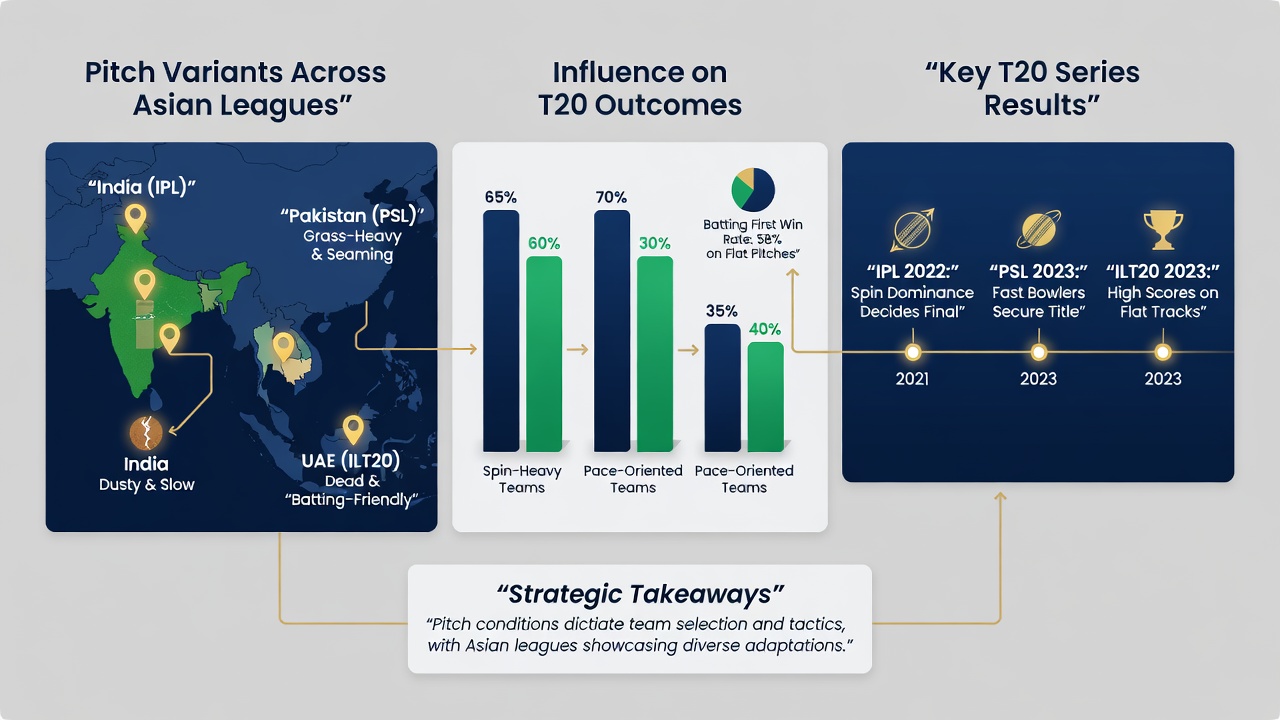
Analyses of completed T20 series across these leagues demonstrate that pitch-induced adjustments account for shifts in win margins. Research published by academic institutions tracking ball-tracking metrics found that teams with flexible spin attacks outperform opponents on deteriorating surfaces by margins exceeding 15 percent in series deciders. Conversely, pace-dominant lineups maintain advantages on greener tracks where early breakthroughs determine total targets. These patterns hold across multiple seasons and remain consistent when controlling for team strength.
Preparation Practices and League Scheduling
Ground staff follow standardized rolling and watering protocols established by regional boards, yet micro-climatic differences produce the observed variants. In August 2026 several leagues schedule preparatory matches at neutral venues to test pitch behavior under similar weather conditions expected during main tournaments. Such trials allow teams to refine selections based on empirical data rather than assumptions.
Strategic Adjustments by Teams
Coaching staffs review historical pitch maps before each series and modify training drills accordingly. Bowlers practice specific lengths and variations suited to the expected surface, while batters simulate high-pressure scenarios on practice wickets replicating league conditions. Data from these sessions feeds directly into match-day decisions, including field placements and powerplay tactics.
Conclusion
Pitch variants across Asian T20 leagues exert measurable influence on individual match results and overall series outcomes. League administrators continue to publish detailed surface reports that enable teams to prepare with greater precision. Ongoing data collection from bodies such as the International Cricket Council and academic analyses from institutions including those affiliated with the Loughborough University cricket research group provide further insight into these relationships. Teams that integrate this information into selection and strategy processes demonstrate clearer advantages in multi-match formats.