Recovery Time Gaps and How They Alter Performance Baselines in Consecutive Volleyball League Fixtures
Cameron Hoffmann · Aug 21, 2026
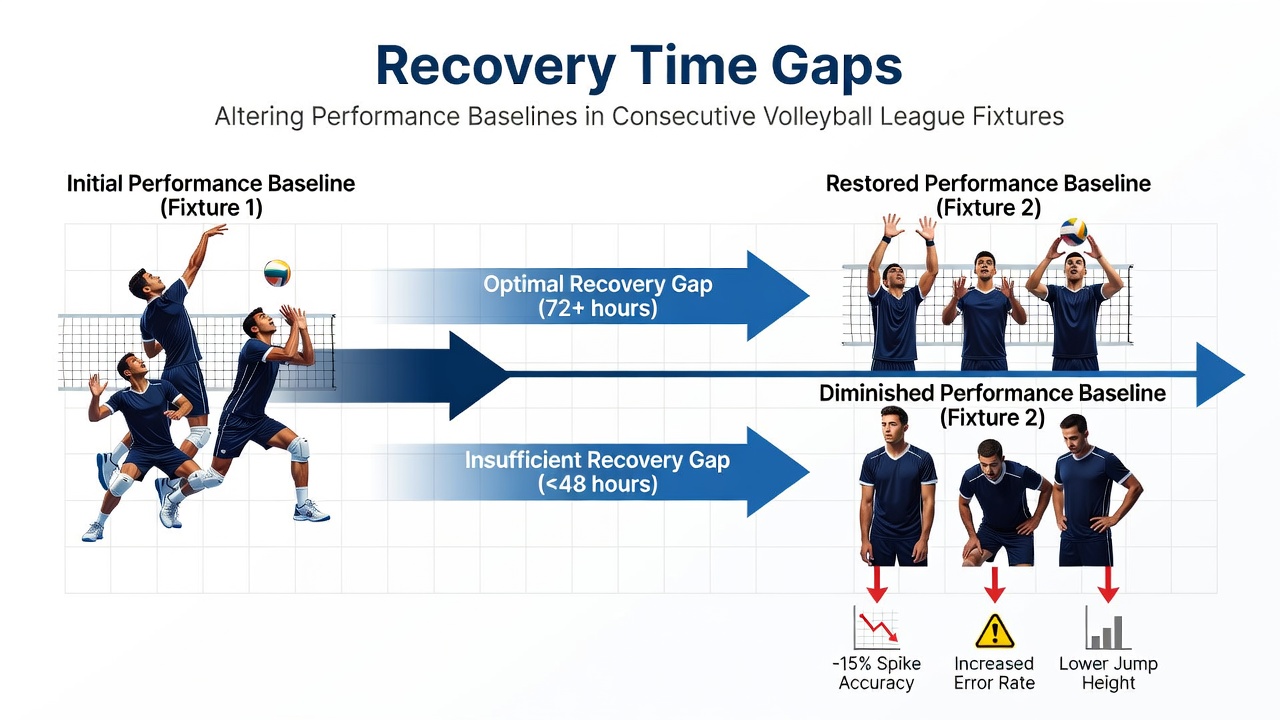
Recovery Time Gaps and How They Alter Performance Baselines in Consecutive Volleyball League Fixtures
Volleyball leagues around the world schedule fixtures with varying recovery intervals between matches, and those gaps directly influence player output across metrics such as attack efficiency, block success rates, and serve accuracy. Data collected from professional and collegiate circuits shows that intervals under 48 hours correlate with measurable declines in key performance indicators while longer windows of 72 hours or more allow baselines to stabilize or rebound. Observers note that these patterns hold across indoor and beach formats, although indoor league structures produce more frequent consecutive-game clusters during peak months.
How Recovery Intervals Shape Match Statistics
Studies tracking elite European leagues reveal that teams playing with 24 to 48 hours between fixtures record a drop in kill percentage of roughly 4 to 7 points compared with their season average, while dig and reception efficiency also slip by 3 to 5 points. In contrast, squads enjoying at least three full days between contests maintain or slightly exceed those same baselines. The Australian Institute of Sport has published reports indicating similar trends in national league data, where serve error rates rise when recovery falls below 60 hours and fatigue-related substitutions increase by nearly 20 percent in the third and fourth sets. These shifts appear consistent across genders and age groups, though younger rosters demonstrate marginally faster rebound when additional rest is provided.
Coaches adjust rotation depth and substitution patterns in response to compressed schedules. When recovery windows shrink, starters often log fewer minutes in early sets to preserve energy for critical phases later in the match. Data from the 2025 season onward demonstrates that teams employing this approach reduce the magnitude of performance decline, yet the overall baseline still sits below levels recorded after extended rest. August 2026 schedules for several major European and Asian leagues already list multiple back-to-back clusters in the opening month, prompting analysts to monitor whether clubs will adapt roster management strategies earlier than in prior years.
Physiological Markers and Performance Tracking
Researchers monitoring heart-rate variability and creatine kinase levels find that players show elevated fatigue markers when matches occur within 48 hours, and these markers align with on-court reductions in vertical jump height and reaction time. One longitudinal project conducted across South American professional clubs tracked 180 athletes over two seasons and documented that jump height dropped an average of 2.8 centimeters after short recovery, with corresponding decreases in spike velocity. Such physiological data helps explain why blocking efficiency and defensive coverage suffer most noticeably in the middle sets of the second consecutive fixture.
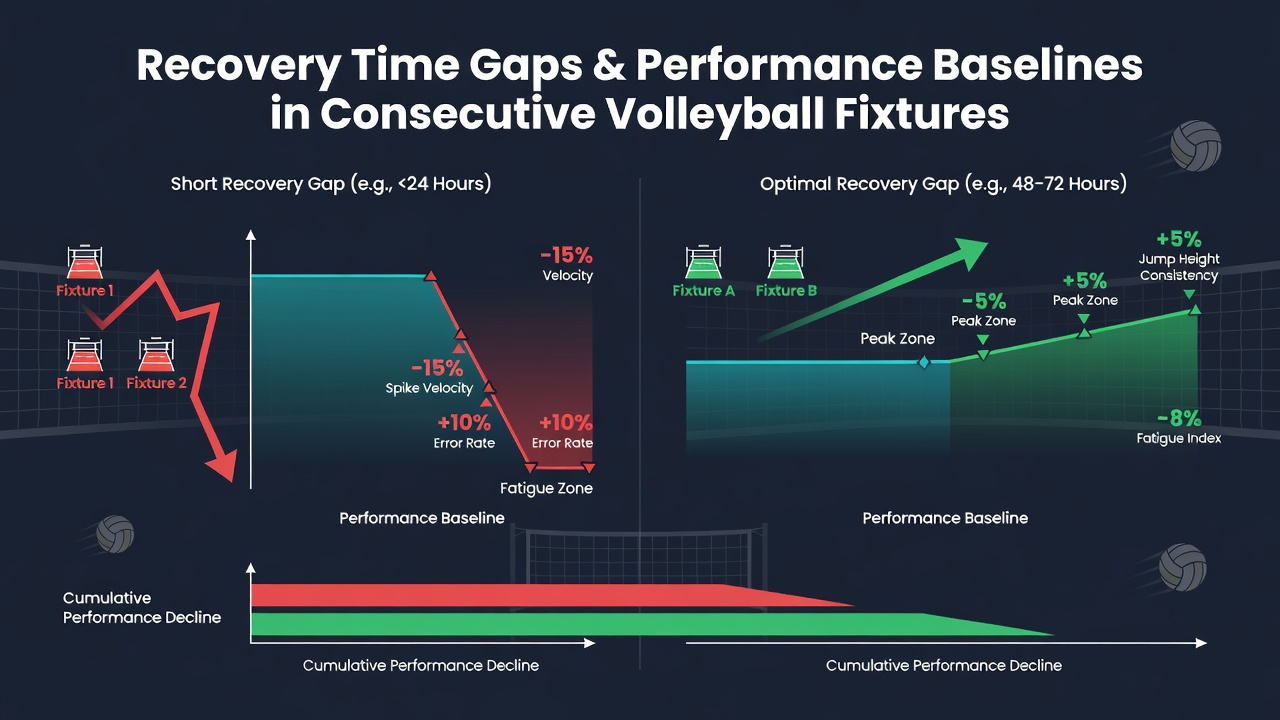
Nutrition and sleep protocols also interact with recovery duration. Leagues that mandate minimum rest periods between travel and competition report fewer instances of acute performance drops, according to internal reports from the Canadian Volleyball Association. Teams traveling across time zones face compounded challenges, because circadian disruption adds to the physical load already imposed by short turnaround times. Observers have recorded that serve reception percentages fall further when matches follow overnight flights compared with same-city doubleheaders separated by two days.
League-Specific Patterns and Scheduling Realities
Domestic competitions differ in how they distribute recovery gaps. Some top-flight European divisions cluster three matches within five days during mid-season windows, creating repeated short-recovery scenarios that compound across weeks. North American collegiate schedules tend to place conference games on consecutive weekends with mid-week contests inserted, producing irregular gaps that range from 48 to 96 hours. Figures from recent seasons indicate that teams facing the most compressed stretches experience a cumulative 8 to 12 percent reduction in overall efficiency ratings by the end of those stretches, even after accounting for opponent strength.
Performance baselines do not reset uniformly. Attackers relying on explosive movements show slower recovery trajectories than setters whose workload centers on decision-making and distribution. Data sets compiled by academic groups in Germany highlight that middle blockers suffer the largest decrements in block touch numbers when rest falls below 72 hours, whereas outside hitters experience more pronounced drops in hitting percentage. These position-specific effects influence substitution decisions and tactical adjustments during consecutive fixtures.
Monitoring Tools and Mitigation Approaches
Modern tracking systems allow staff to quantify readiness before each match, and several leagues now incorporate wearable data into official injury-prevention guidelines. When recovery intervals shorten, clubs increase emphasis on active recovery sessions, contrast baths, and targeted mobility work. Evidence from multi-year studies suggests these interventions narrow but do not eliminate the performance gap created by abbreviated rest. Teams that maintain consistent sleep hygiene and nutrition across short turnaround periods record smaller deviations from baseline than squads relying solely on passive rest.
August 2026 calendars already reflect ongoing efforts by schedulers to balance competitive density with athlete welfare. Several federations have introduced minimum 60-hour recovery mandates for certain tournament phases, and early data collection will reveal whether these rules measurably stabilize performance baselines compared with prior seasons. The interplay between fixture congestion, travel demands, and individual recovery capacity continues to shape how volleyball leagues structure their calendars and how teams prepare for consecutive contests.
Conclusion
Recovery time gaps between volleyball league fixtures produce predictable shifts in performance baselines across technical and physical metrics. Shorter intervals correlate with declines in efficiency measures while longer windows support maintenance or slight improvement of those same indicators. Physiological tracking, scheduling analysis, and position-specific data all confirm that these effects operate consistently across multiple leagues and competition formats. As calendars evolve through 2026 and beyond, the relationship between rest allocation and output remains a central factor in competitive preparation and league operations.